
With the 2027 electoral cycle gradually approaching, APC leaders are intensifying efforts to strengthen party unity, manage internal interests, and build a broad consensus capable of sustaining political stability, grassroots confidence, and electoral competitiveness across Nigeria.
Nigeria’s political direction is gradually turning toward the coming electoral cycle, and the All Progressives Congress is prioritizing party unity, stakeholder outreach and consensus building, given that victory in elections may be won before campaigns even start.
Electoral success is not a political party’s standard method of control.
Their strength is related to their ability to handle internal interests, balance other demands and maintain confidence within their own membership once in power. For the All Progress Congress (APC), the pathway to 2027 is already proving to be a challenge of adherence to organizational discipline and strategic coordination. In multiple states, party leadership has become more concerned about holding the coalition together and building a stronger support base for President Bola Ahmed Tinubu and his policy prescription.
There seem to be conscious attempts to reduce the internal fragmentation in recent years in the APC. Party chieftains have openly supported President Tinubu and other key governors for future elections in states like Katsina, indicating a desire to minimise uncertainty and provide stability in the party’s hierarchy.
Also read: Renewed Hope Beyond Campaigns: The Political Mobilization Strategy of Tinubu’s Allies
These endorsements are not just political strokes of the pen. These are part of a general approach of unifying support, building confidence in party membership, and stifling factional disagreements that have historically undermined the effectiveness of political parties in Nigeria. Political history has shown that party divisions within ruling parties are more frightful than divisions from outside parties.
In this context consensus building is especially significant because the APC is composed of a wide variety of members. The party, which was created by the union of major political groups in 2013, has gathered together politicians with various ideological orientations, regional preferences and political traditions. It is important to negotiate and engage with this large group of people to keep an agreement going. Consensus-based systems are sometimes more stable because they foster accommodation over confrontation,” said the political scientist Arend Lijphart. The idea is still applicable in the context of party politics, where multiple interests may have to be managed to maintain the viability of a party.
The party has also felt the impact of the Tinubu administration’s reform programme in political management. The implementation of economic reforms such as the removal of fuel subsidy and foreign exchange restructuring have sparked intense national debates.
Also read: Atiku Challenges Tinubu Over Alleged Moves Against Opposition Parties, Invokes Buhari and Jonathan’s Democratic Record
Party leaders have taken up greater responsibility for political communication and reassuring stakeholders, while government officials concentrate on implementation. Their job is not just to represent the policy but to ensure there is a continuing conversation with communities, to communicate the goals of policy reform and to work through occupants’ expectations of community service during a transition period. Boolean strong political frameworks can buffer against substantial policy shifts and uncertainties.
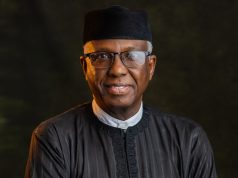
In this context, the political has become important and influential actors like Ibrahim Kabir Masari have emerged.
Special Adviser to the President on Political Affairs, Masari, belongs to a class of political players whose main strength, besides carrying out coordination, consultation and relationship handling, is in coordinating people’s actions.
These players play a behind-the-scenes role that can help bolster communication between government, party stakeholders and grassroots supporters. Their role is particularly important if you want to preserve political unity between different parts of the country and between different segments of the population.
The APC’s attempt to stay alive between elections is also very important.
Also read: Oyo Lifts Curfew in 10 LGAs as Search Continues for Abducted Pupils, Teachers
One of the hallmarks of a vital political party in the world: its capacity to stay engaged outside of election cycles. Maurice Duverger, a political sociologist, noted that enduring parties are composed of long-term rather than short-term excitement at the polling station. This lesson is becoming more and more pertinent as APC leaders sink more time into going to their support base, holding meetings, consulting and engaging with their constituencies at the grassroots level and also outreach work in the regions to connect the party with its support base.
The journey to 2027 will be a tumultuous one, with potential challenges and obstacles to be addressed as goals are pursued and political considerations shift.
However, the APC’s new focus on consensus implies a recognition that the unity they desire cannot be taken for granted, but must be cultivated. A win might attract attention, but unity can be the factor that leads to action. Through the focus on dialogue, internal differences management and emphasis on organisational discipline, party leaders are trying to brand the APC as a governing party, and as a political alliance that can make sense in Nigeria’s increasingly competitive democratic space.