Beyond policy announcements and electoral victories, the success of the Renewed Hope agenda depends on trusted political mobilizers who connect government priorities with grassroots realities, sustain public engagement, and reinforce support for reform across Nigeria’s diverse communities.
Although government policies may seem to get most attention, the sustainability of an administration relies on the ability of political actors to advocate for policies in public, to engage the grassroots, and to foster trust and legitimacy between leaders and citizens.
Liike Ibrahim Kabir Masari, have cropped up in the president’s Renewed Hope programme as bridges between governance and political mobilisation.
Political campaigns can win election, but governing calls for another type of engagement.
After the vote, governing bodies have the tougher job of building public trust in the implementation of the policy. The challenge has gained further momentum in the present exploits of President Bola Tinubu, who introduced the Renewed Hope programme as a blueprint for economic reforms, institutional development, infrastructure development, and social investment.
The Renewed Hope agenda has premiered at a time of great economic transition.
Fuel subsidy phaseout coupled with a range of external reforms such as exchange rate liberalization and investment promotion campaigns has led to strong public discussion in various arenas of society.
Also read: Falana Urges Attorney-General to Stop Police from Criminalising Criticism of Public Officials
Leaders of reform typically bring short term pain in exchange for long term gains. However, it has long been recognized by political scholars that whilst reform governments need to have communication facilities, these need to be very strong to sustain public faith through periods of adjustment. Political mobilization thus is not just about elections but is about governance.
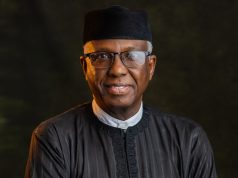
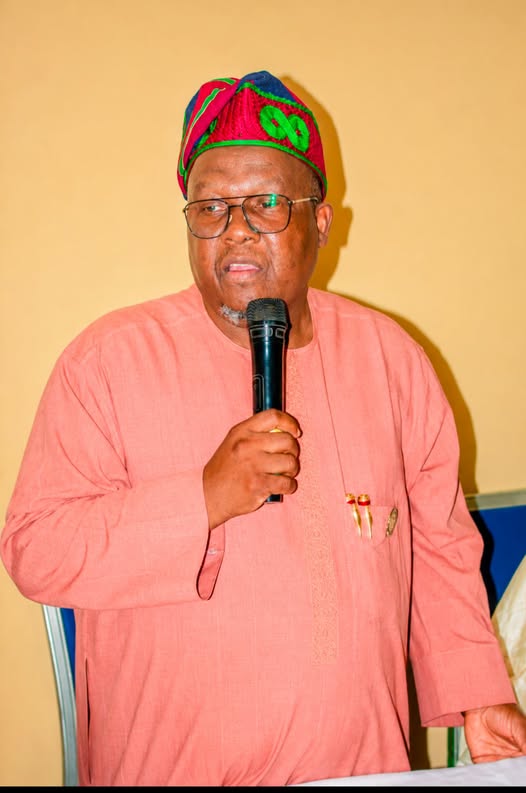
Politicians, such as Ibrahim Kabir Masari, play a significant role in this.
Prior to the presidency, Masari held the position of National Welfare Secretary in the All Progressives Congress, where he gained invaluable insights into party dynamics and grassroots mobilization at the national level. He was subsequently named Senior Special Assistant to the President on Political Affairs and subsequently was appointed Special Adviser to the President on Political Affairs indicating the administration’s perception of need for political coordinators who had the requisite background and experience to facilitate interaction and maintain a dialogue between government and stakeholders.
His duties fall under the purview of the wider task of ensuring effective communication of policy goals to politicians, community leaders, and grassroots advocates.
Political mobilization in today’s Nigeria goes beyond the campaign rally and the party gathering. It has a sustained relationship with both traditional community institutions and youth groups, as well as with religious organizations, other professional groups and local political bodies. These networks can sway public opinion far more than official statements.
Social capital is the foundation of democratic institutions, as posited by social scientist Robert Putnam. Governments with active relationships with such networks are also likely to have better chances of obtaining public support and policy acceptance.
Also read: Uganda’s Military Chief Orders Closure of Daily Monitor, NTV in Major Press Freedom Crackdown
Keeping grassroots enthusiasm alive after election success is in fact a key goal in the APC. Ongoing political parties tend to be stronger than those that start during election periods. This has facilitated grassroots mobilisation as part of the APC’s political approach. Party leaders and presidential advisers, who are involved in consultations with members, members’ association and meeting with stakeholders as well as participation in the regional engagements, ensure organizational coherence and facilitate access for public concerns to party decision making.
This is the strategy that is evident in Masari’s political profile.
Within party circles, he is a grassroots mobiliser with strong prerogative of relationships that extend through northern Nigeria, as such, he is considered to be a category of political actors whose influence does not have public visibility. These numbers are often critical to defuse political conflicts, consolidate party unity and boost confidence in governmental efforts.
Also read: ‘Akara Paid My School Fees’: Sunday Dare Defends First Lady Remi Tinubu Amid Entrepreneurship Debate
They help kindle the connection between policy making in Abuja and receival at the community level.
The durability of any governing agenda depends on more than policy design. It requires the ability to develop understanding, encourage participation and maintain public interest. The role of political coordinators such as Ibrahim Kabir Masari shows how enduring a democratic principle is when reforms are linked to effective actions on the ground—a bedrock lesson of democratic governance.
In this way, the Renewed Hope agenda is more extensive than simply the government’s Renewing Hours programme; it is also a political initiative supported by networks of trust, communication and citizen engagement throughout the nation.