
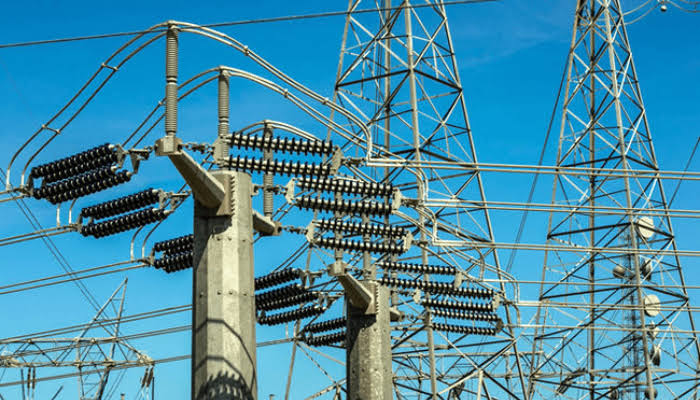
The Japanese government, through the Japan International Cooperation Agency (JICA), has committed ₦20 billion to expand and rehabilitate Nigeria’s electricity transmission infrastructure, with the Apapa Transmission Substation in Lagos at the centre of the intervention.
JICA Chief Representative in Nigeria, Ishigame Keiji, disclosed the commitment in an interview with the News Agency of Nigeria in Lagos on Wednesday.
He said the funding, equivalent to ¥2.35 billion, would cover construction works, equipment procurement, engineering services, operational training and other project implementation requirements.
Apapa Substation Gets Major Upgrade
The Apapa facility occupies a strategically important position within Nigeria’s transmission network, particularly because of the concentration of industrial, commercial and maritime activity around the Lagos axis.
ALSO READ: Tinubu’s 2027 Test: Can APC Turn Economic Reforms Into Electoral Support?
According to JICA, rehabilitation and reinforcement work at the substation has already increased transmission capacity, strengthened grid stability and reduced bottlenecks affecting electricity evacuation and distribution across Lagos and surrounding areas.
The intervention comes as electricity demand continues to rise while parts of Nigeria’s transmission infrastructure face ageing equipment and capacity constraints.
The importance of the Apapa upgrade was underscored by the Federal Government’s recent commissioning of upgraded Apapa Road and Ijora transmission substations in Lagos.
The projects added a combined 208MW of bulk transmission capacity, with JICA supporting the Apapa upgrade.
At Apapa, two new 60MVA transformers and modern gas-insulated switchgear were installed, taking the substation’s capacity to 180MVA and adding about 96MW of bulk power availability to the axis.
ALSO READ: US Removes 12-Year Security Hurdle for Nigerian Ships
Lagos-Ogun Network Also Targeted
Japan’s intervention extends beyond Apapa. Keiji said JICA is implementing another Official Development Assistance project through a concessional loan to strengthen the transmission network serving Lagos and Ogun states.
JICA is also providing technical assistance and policy advisers to the Federal Ministry of Power, with the objective of supporting electricity-sector reforms, regulatory implementation and institutional development.
Keiji said the Japanese government is collaborating with the Ministry of Power to support a more stable and reliable electricity supply in Nigeria.
Japan Pushes Broader Power Strategy
The JICA representative said Nigeria’s large consumer and industrial market continues to attract interest from Japanese companies and other private investors.
He urged the Federal Government and investors to pursue a combination of on-grid, off-grid and mini-grid solutions, rather than depending exclusively on the national grid.
ALSO READ: Military Moves Plateau Command Closer to Violence Hotspot as Killings Escalate
JICA is also collaborating with the World Bank on mini-grid development, particularly for rural communities, while deploying experts to support policy recommendations and institutional improvements within Nigeria’s power sector.
The broader strategy reflects an effort to address Nigeria’s electricity challenge at several levels—from major transmission infrastructure to decentralised power systems capable of serving communities beyond the reach or reliability of the conventional grid.
Transmission Bottlenecks Remain Critical
The Japanese commitment comes at a time when the Federal Government is placing renewed emphasis on transmission capacity.
Power Minister Joseph Tegbe recently said the government was targeting the ability to wheel 6,000MW through the national grid by December 2026, while planning to commission 20 transmission projects nationwide before the end of the year.
The central challenge is not simply generating more electricity. Available generation must also be transmitted and distributed efficiently to consumers.
ALSO READ: UAE Halts Iran Trade, Financial Dealings as Regional Tensions Escalate
Investment in substations such as Apapa therefore addresses one of the key constraints between electricity generation and actual supply to businesses and households.
For Lagos, where industrial activity, ports, manufacturing and commercial operations place heavy demands on electricity infrastructure, improved transmission capacity could also help reduce reliance on expensive self-generation.
The Japanese intervention consequently represents more than a single substation project. It forms part of a wider effort to strengthen Nigeria’s electricity infrastructure, attract private investment and create a more resilient power system.
The effectiveness of the investment, however, will ultimately depend on whether improved transmission capacity is matched by adequate generation, gas supply, distribution infrastructure, maintenance and sector-wide reforms.