
Federal Capital Territory (FCT) Minister Nyesom Wike has ordered the removal of structures obstructing designated waterways in Abuja after inspecting areas affected by recent flooding and discovering a building erected on a drainage plot whose allocation had been revoked years ago.
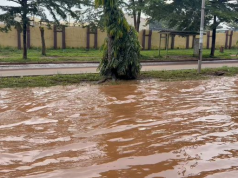
Wike conducted an inspection of flood-affected locations in Maitama and other parts of the FCT on Tuesday, following heavy rainfall that caused flooding in several areas of the capital.
During the inspection, the minister visited a designated drainage area where a structure had been constructed despite the plot having been revoked in 2011 on grounds of overriding public interest. A sign at the location identified the property as Plot 4508 A06 and warned that it was a drainage area that should be kept clear.
ALSO READ: Abuja Flood Crisis Rekindles Debate Over Unchecked Urban Expansion
The discovery has intensified concerns about the impact of illegal construction and encroachment on Abuja’s drainage network. The affected location was designed to serve as a channel for stormwater, meaning obstruction of the corridor can restrict the movement of runoff during periods of intense rainfall.
Wike said the inspection exposed cases where individuals had blocked channels identified in the Abuja Master Plan for water flow. He warned that the government would not allow property owners or their political influence to prevent enforcement of planning regulations.
The minister subsequently directed the FCT Development Control Department to begin removing structures built on designated waterways. He said buildings obstructing water channels would be demolished, regardless of the status or influence of their owners.
ALSO READ: The Confident F.O.G: How Finance, Operations and Growth Build Sustainable Businesses
The move comes after significant flooding affected parts of Abuja, including high-value districts, following heavy rainfall over the weekend. The incidents have renewed debate over drainage capacity, urban planning enforcement and the conversion of areas reserved for environmental and drainage purposes.
Beyond immediate flood control, the controversy highlights a longer-running challenge facing Abuja: maintaining the integrity of its original master plan as the city expands and property development intensifies.
Drainage corridors, flood channels and other reserved areas are designed to provide essential pathways for stormwater. When such spaces are occupied by buildings or other permanent structures, authorities can face greater difficulty managing runoff during extreme rainfall.
ALSO READ: British High Commission Hails Peaceful Osun Poll, Flags Voter Access Concerns
The FCT administration’s latest position suggests that enforcement could become more aggressive, particularly against developments that interfere with designated waterways.
The government has therefore placed the issue of urban planning compliance and flood mitigation at the centre of its response to the latest flooding.
Wike’s inspection and subsequent demolition directive now raise a wider question about how many other structures across Abuja may have been built on drainage corridors, flood plains or other revoked plots—and whether enforcement will extend beyond the locations already identified.