
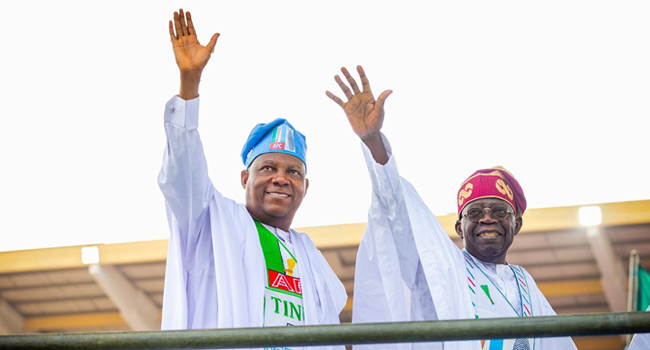
Nigeria’s 2027 presidential campaign has officially entered a new phase, with President Bola Ahmed Tinubu seeking a second term under the ruling All Progressives Congress (APC). The contest will test not only Tinubu’s record in office but also whether the party can defend nearly 12 years of federal power against an increasingly vocal opposition.
The presidential campaign season began on Wednesday, August 19, 2026, setting the stage for what is expected to be a closely contested election.
Tinubu’s principal political challenge will come from opposition figures including former Vice-President Atiku Abubakar and former Anambra State governor Peter Obi, whose campaigns are built heavily around public dissatisfaction with the economy and insecurity.
At the centre of the election is a difficult question for the APC: have Nigerians become better off under its nearly 12 years in power?
ALSO READ: US Removes 12-Year Security Hurdle for Nigerian Ships
The party has governed Nigeria since 2015, first under former President Muhammadu Buhari and subsequently under Tinubu.
Reuters notes that the period has been marked by significant economic deterioration, including a fall of more than 50% in GDP per capita during Buhari’s tenure and a substantial increase in national debt.
Tinubu inherited that difficult economic environment when he assumed office in May 2023.
Tinubu responded with some of the most consequential economic reforms in decades.
His administration removed the petrol subsidy and substantially altered the exchange-rate regime, policies that were intended to reduce government distortions and place the economy on a more sustainable footing.
ALSO READ: Military Moves Plateau Command Closer to Violence Hotspot as Killings Escalate
The reforms have received recognition from investors and international financial institutions, but their immediate consequences have been painful for households.
Higher fuel prices, currency depreciation and rising living costs have contributed to severe inflationary pressure and weakened purchasing power.
Reuters reports that nearly 80% of Nigerians surveyed believe the country is heading in the wrong direction, with economic hardship and insecurity among their leading concerns.
That disconnect between macroeconomic reform and household experience could become one of the defining issues of the campaign.
For Tinubu, the argument is that the reforms were necessary to prevent deeper economic problems and create the foundation for future growth.
ALSO READ: UAE Halts Iran Trade, Financial Dealings as Regional Tensions Escalate
The opposition is likely to frame the same policies as evidence that the administration has imposed excessive hardship without delivering sufficient improvement in everyday life.
Security will provide another major electoral battleground.
Nigeria continues to face terrorist attacks, kidnappings and other forms of violent crime across several regions. Although the administration has expanded military capacity and maintained security operations, persistent violence remains a major source of public anxiety.
Yet Tinubu enters the campaign with significant political advantages.
The APC has consolidated considerable political strength at the state level. According to the Associated Press, 31 of Nigeria’s 36 state governors are now members of the ruling party, a development that gives the APC an extensive political and organisational network heading into the election.
Tinubu also has the advantage of an established political structure and the formal backing of the APC. The party endorsed him for a second term in 2025, providing an early indication that the president would face no serious internal challenge for the ruling party’s presidential ticket.
ALSO READ: Nnamdi Kanu Challenges Delay in Appeal Against Terrorism Conviction
But political strength does not automatically translate into voter enthusiasm.
The APC must defend its record in an election where economic conditions will be judged at the household level. Voters are likely to assess whether reforms have improved employment, food affordability, electricity supply, transportation, security and access to basic services.
The opposition, meanwhile, faces its own obstacle: fragmentation.
Atiku and Obi remain prominent challengers, but opposition forces have struggled to maintain a unified political platform capable of presenting a single alternative to Tinubu.
AP reports that 18 presidential contenders are in the field, while efforts to create a united opposition front have not produced a consolidated challenge.
That division could ultimately work in Tinubu’s favour. The 2023 presidential election demonstrated how a fragmented opposition can allow an incumbent or leading candidate to prevail without securing an overwhelming share of the national vote.
The 2027 election will therefore be about more than personalities. It will be a referendum on economic reform, security, political organisation and the credibility of competing visions for Nigeria.
For Tinubu and the APC, the campaign offers an opportunity to convince Nigerians that the hardship associated with the early years of reform represents a difficult transition toward stronger economic fundamentals.
ALSO READ: DSS Probes Ekiti Monarch Over Controversial Church Seat Request
For the opposition, the challenge is to convince voters that the sacrifices have produced insufficient results and that a change of political leadership would offer a better path.
Ultimately, the most important campaign battlefield may not be the political rallies but the everyday experience of Nigerian households.
The 2027 election will ask a simple but consequential question: can Tinubu persuade Nigerians to endure the pain of his reforms long enough to believe in their promised gains?