
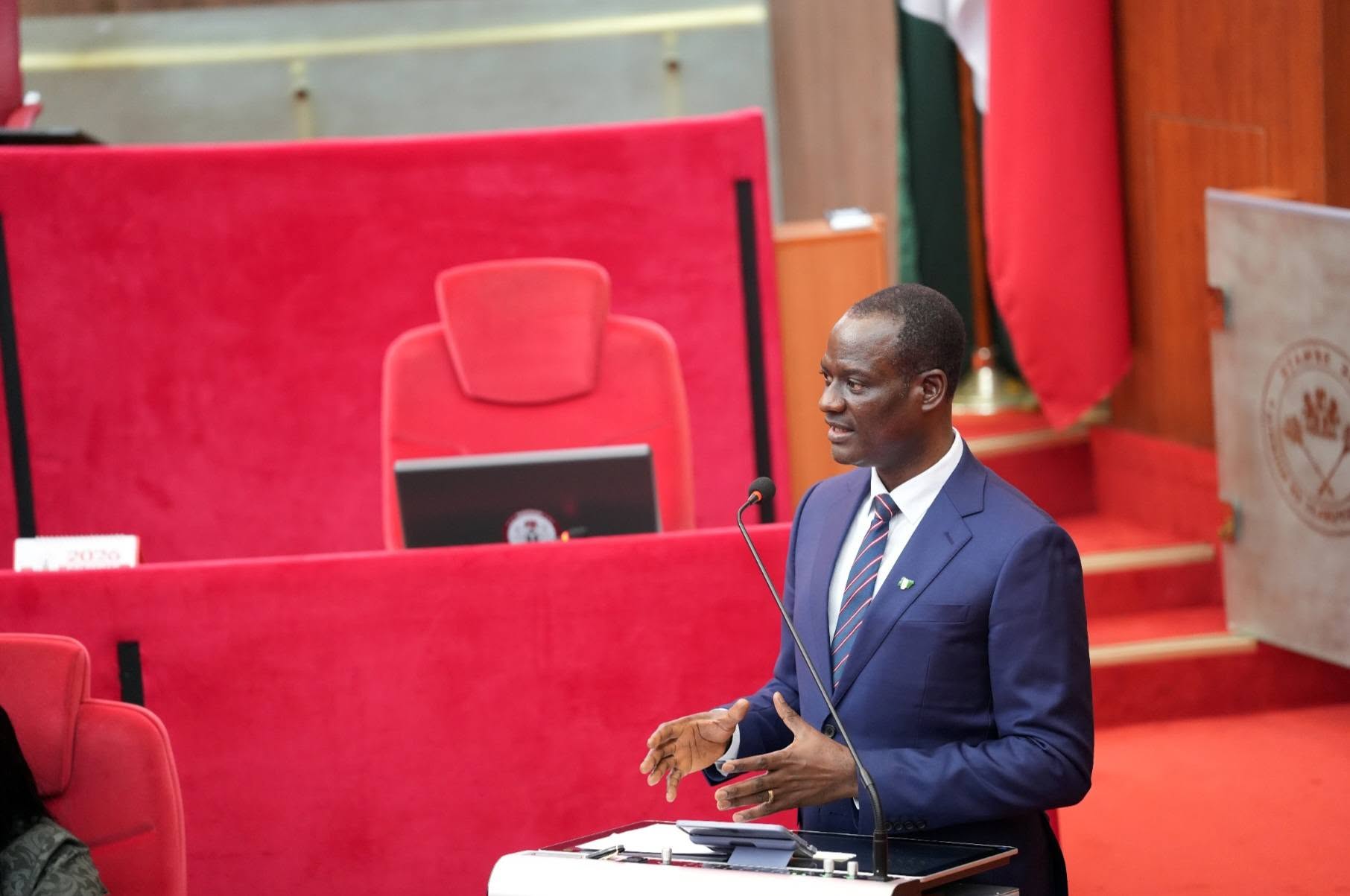
Nigeria’s Minister of Finance and Coordinating Minister of the Economy, Taiwo Oyedele, has reiterated that the Federal Government’s strategy for increasing public revenue is centred on expanding the country’s tax base rather than raising tax rates, arguing that broader tax compliance offers a more sustainable path to economic growth and fiscal stability.
Oyedele made the remarks in Abuja while receiving the leadership of the Chartered Institute of Taxation of Nigeria (CITN), which visited the Federal Ministry of Finance as part of activities marking the maiden National Tax Awareness Day. According to reports, he stressed that Nigeria’s revenue challenge stems largely from the country’s relatively small number of active taxpayers rather than excessively low tax rates.
He urged Nigerians to embrace voluntary tax compliance, describing taxation as a civic responsibility that enables governments to finance critical infrastructure, healthcare, education, security and other public services. According to the minister, increasing the number of individuals and businesses paying taxes would generate more sustainable revenue while reducing pressure on those already within the tax system.
“The solution is not to impose higher taxes but to bring more eligible taxpayers into the system,” Oyedele said, noting that many economically active Nigerians remain outside the formal tax net. He added that improving compliance would also promote fairness by ensuring that the tax burden is shared more equitably across society rather than concentrated on a relatively small segment of compliant taxpayers.
Also read: Former Trump Adviser John Bolton Pleads Guilty in Classified Documents Case, Faces Sentencing Later This Year
The minister acknowledged that public perception remains one of the biggest obstacles to tax compliance, observing that many Nigerians still view taxation primarily as a means for government to collect money rather than as a mechanism for national development.
He therefore called on professional bodies, civil society organisations and the private sector to intensify public education campaigns aimed at improving understanding of how tax revenue supports economic growth and public service delivery.
His comments come one year after President Bola Tinubu signed Nigeria’s landmark Tax Reform Acts into law, legislation designed to modernise the country’s tax administration, simplify compliance procedures and improve revenue collection.
Activities commemorating the anniversary included taxpayer sensitisation campaigns, public awareness programmes and engagements between tax administrators and business stakeholders across the country.
Nigeria’s tax-to-GDP ratio remains among the lowest in Africa, a challenge successive administrations have sought to address through reforms aimed at widening the tax base rather than introducing excessive tax burdens.
Also read: Venezuela Earthquake Death Toll Climbs Above 920 as Rescuers Search for Thousands Trapped
Economists have long argued that improving compliance, formalising more businesses and strengthening tax administration could significantly boost government revenue without undermining economic productivity or discouraging investment.
During the meeting, Oyedele encouraged the Chartered Institute of Taxation of Nigeria to sustain nationwide awareness initiatives and deepen engagement with citizens to promote voluntary compliance. He also suggested recognising exemplary taxpayers through annual awards, saying such incentives could strengthen public confidence and encourage responsible tax behaviour.
The Minister maintained that building a fair, transparent and efficient tax system remains essential to achieving Nigeria’s long-term development goals. He said expanding the tax net would provide government with more predictable revenue to finance infrastructure, social services and economic reforms while reducing dependence on borrowing and volatile oil earnings.
Fiscal policy experts say broadening the taxpayer base has become increasingly important as Nigeria seeks to diversify government revenue sources amid fluctuating global oil prices.
They note that sustained public confidence, efficient tax administration and greater transparency in the use of public funds will be critical to encouraging more Nigerians to voluntarily comply with tax obligations.