
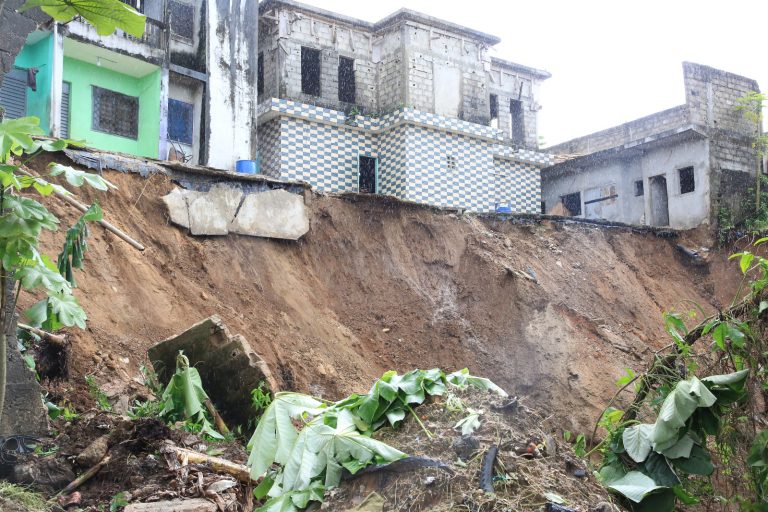
Ivory Coast floods: at least 59 killed as rain continues Ivory Coast government officials have issued a warning that the humanitarian crisis could worsen as the West African nation’s rainy season continues after weeks of unrelenting rain, which have caused devastation. Some 59 people have already been killed in the catastrophic floods.
Authorities also reported that the disaster has injured several dozen others and displaced thousands.
Heavy rains, which began late last month, has destroyed many homes and infrastructure including roads and bridges.
Abidjan, which is on the country’s Atlantic coast and serves as the commercial capital, is one of the regions severely hit by the floods. Drainage systems overflowed and waterways, such as the Canal de Divo and the Ébrié lagoon, surged into neighbourhoods, making most of the transport routes impassable.
ALSO READ: CBN Revokes Licences of 46 Microfinance Banks Over Regulatory Breaches
Rescue efforts have begun, with government officials say search and rescue teams working to rescue those trapped and relocate people to safety. The government says it’s assessing damage to public infrastructure like roads and schools.
“The loss is immense, our brothers and sisters of Ivory Coast are suffering,” President Alassane Ouattara tweeted after news of the deadly flooding spread on Sunday.
The government says it has launched measures including emergency relief, evacuation of at-risk populations and efforts to quickly restore essential infrastructure. The West African nation annually experiences flooding, particularly during the heavy rainy season, and often in Abidjan which has an inadequate drainage system and has seen expansion of informal settlements over the years.
A growing body of research suggests that global climate change is increasing the risk of extreme weather events, like severe rainfall, in regions like West Africa.
ALSO READ: Fuel Marketers Threaten Nationwide Shutdown Over Planned Petrol Price Controls
The government announced on Monday that an “operation to rescue stranded populations and transport them to a place of safety is in progress”. It added that steps are underway to provide humanitarian assistance and to re-evaluate the destruction caused by the floods. “Our priority now is the protection of lives and the provision of humanitarian assistance to affected communities.”
Experts warned that the increased intensity of rains, combined with poor urbanisation, urban flooding and construction in sensitive areas are factors contributing to the high death toll.
Ivory Coast experienced its worst-ever floods in July 1990, when more than 200 people died in Abidjan following days of torrential rain. “The country has to invest in resilient infrastructure to cope with the increase in intensity of extreme events, in particular on drainage in its main cities, particularly Abidjan,” said Adou Yao Lazare, professor of geography and urbanisation expert at Felix Houphouët-Boigny University in Abidjan.
He added that it is also “crucial to enforce strict land-use planning in flood-prone areas to avoid constructing buildings that are susceptible to the risks.” Prime Minister Robert Beugré Mambé warned that the scale of the destruction may lead to a humanitarian crisis if not properly handled.
ALSO READ: Sanwo-Olu Approves Dredging of 28 Drainage Channels After Flooding Hits Lagos
He said on Saturday that while efforts to evacuate people were underway, the work of search and rescue teams in the hardest-hit areas was ongoing, especially for those reportedly trapped or missing.
Emergency services appealed to residents living in low-lying areas and on river banks to avoid travelling unless it is absolutely necessary. “We call on the population to exercise caution and, where possible, to go to higher grounds to avoid the consequences of the continuing rain.”