
The effectiveness of the government in terms of the number of policies it is announcing is not the measure of the government’s success as history has proved it. What lies between vision and transformation is the challenging cogs of governance where ambition has to be translated into action, government institutions properly coordinate, governments have to deliver visible results.
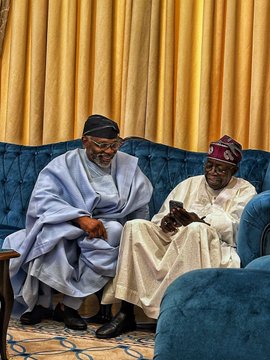
This is the strenuous environment in which president Bola Ahmed Tinubu and the serving Chief of Staff, Femi Gbajabiamila, have to envision a new ballgame for the executive arm of government in Nigeria.
Tinubu would come into office on a promise of sweeping reforms and with an obvious determination to rise to the challenges of the nation. Governing a country as complex an Nigeria’s, demands more than straightforwardness in making decisions.
Related News: US Citizen Tests Positive for Ebola in DR Congo as CDC Says Risk to America Remains Low
Presidential directives must pass through Ministries, Departments and Agencies. Clear responsibilities need to be set. Competing institutions need to mesh. Progress needs to be monitored. Correction must result from failure.
This is not through the agency of administrative housekeeping. It’s a tool of the President’s power.
The Tinubu government has been increasingly focused on performance and accountability of executive officials, tracking delivery. Performance indicators set for the ministers and permanent secretaries, and government has enhanced structures aiming at monitoring implementation. There’s an important principle, the public should have measurable responsibility.
The champion of this machinery is Gbajabiamila.
This transition from Speaker of the House of Representatives to Chief of Staff isn’t just a shift between two offices. It introduces 20 years of Parliamentary expertise into the front lines of the Presidential Office. Negotiations, the building of coalitions and institutional patience and interest management was taught in Parliament. The executive requires the capability to be coordinated, timed, delivered and executed.
Related News: The Politics Of Continuity: Inside A Leader Who Chooses Institution Over Spotlight
The conversion issue is important because not all governments have a problem with ideas. They have not performed well in the transitional periods between institutions. One ministry goes forward and another ministry goes backward. If you make an announcement, then people click and clap and if you do this, then people do this, but if you do this, then people don’t do this, etc. The workplace becomes more diffuse, accountability is lost.
Effective executive leadership fills those voids.
The establishment of the relationship between Tinubu and Gbajabiamila, therefore, provides an adequate guideline to modern governance. By setting a direction, a president introduces direction, but direction, if it is to reach consciousness in action, must come into action in the institution. However, the function of a Chief of Staff does not confer from ministers or agencies: it merely assists the President to make sure that his priorities do not become trapped between different incompatibilities of the Bureau.
This leadership is not obviously visible.
Government business comes in often-uncontrolled forms, rarely in ceremonies and headlines. It occurs when timelines are constantly called, institutional constraints are sorted, competing interests being coordinated and when choices are insisted to “go to implementation”.
Related News: Tinubu Lauds Security Forces as Oyo Abductees Regain Freedom
Nigeria has still a lot of challenges on the economic, security and development fronts. Government cannot be judged by the intention, but by the consequences. Governance reaches the citizens in the form of food, electricity, good roads, education, a safe environment and jobs.
The final language of leadership is that reality which is delivery.
Beyond his vast political experience, Tinubu has been all about building structures and discovering talents in fraught institutions. Gbajabiamila has been influenced in her career by a combination of legislative organisation and political negotiation. Their current task is to transform these consolidation gains into a more cohesive government.
The more fundamental expression is eternally true. Power can be given as a mandate, but only organisation can hold it up. Vision is relevant for the announcement of a destination but coordination will construct the road up to the destination.
Related News: Family Mourns Slain Oyo Teacher After Captives’ Release
Whether institutionalized, bold reform and visible policy progress, would therefore be the measure of this administration’s success.
Presidencies eventually end. Titles eventually change. What is left is strengthened capacities, strengthened institutions and the improved lives.
That’s the complex road of leadership to legacy, of coordination to delivery—and authority to achievement.