THE QUICK BRIEF
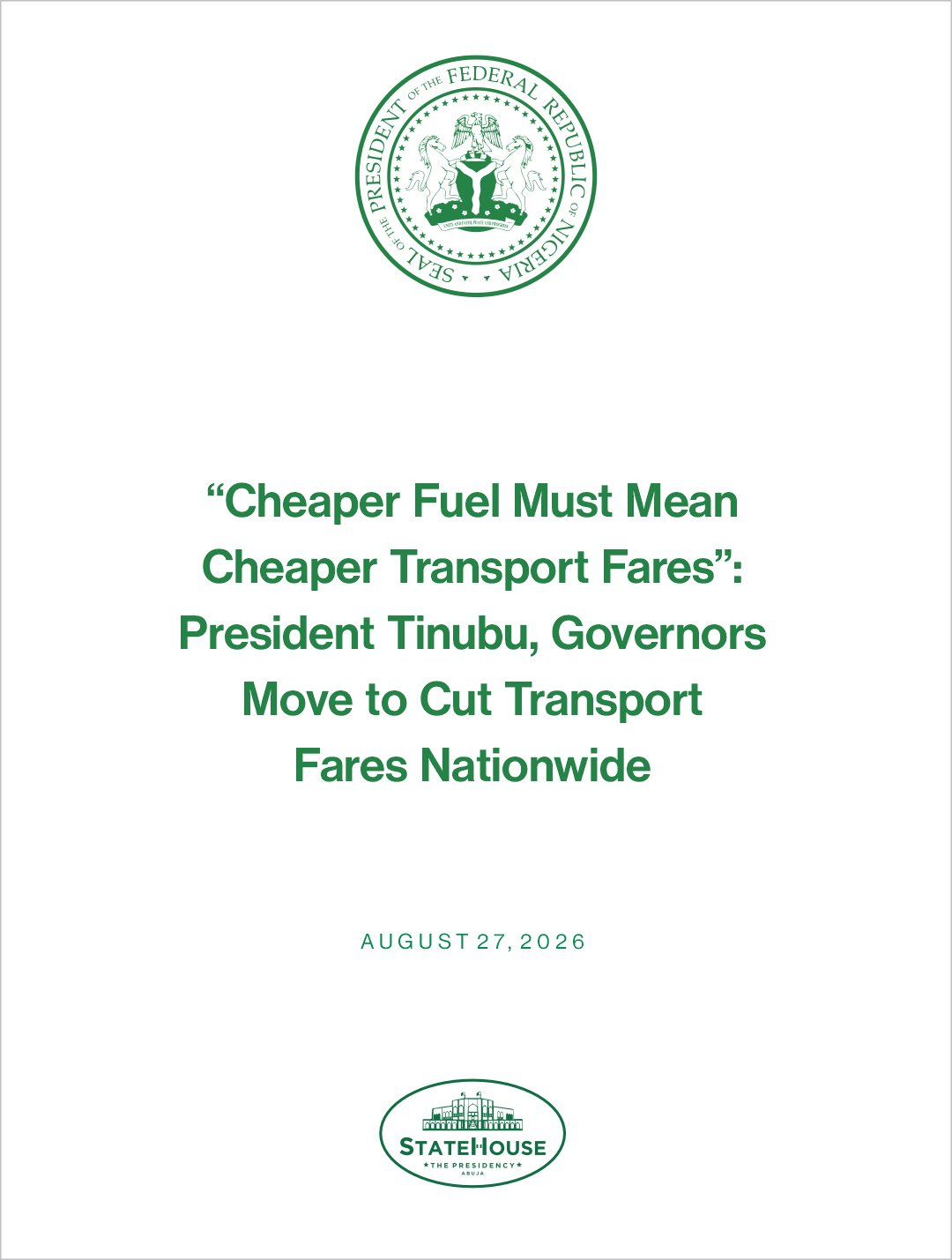
- The Core Event: President Bola Ahmed Tinubu says the Federal Government and state governors have agreed to take immediate steps to reduce intra-state transport fares by expanding the use of CNG and electric vehicles.
- The Target Audience: Commuters, commercial drivers, transport operators and households facing high daily transportation costs could benefit directly from the proposed fare reductions.
- The Underlying Trigger: The move follows growing pressure to ensure that lower operating costs from CNG and alternative-energy vehicles translate into actual savings for Nigerians rather than remaining with transport operators.
NIGERIA INDEPENDENCE DAY GIFT
Tinubu’s latest intervention shifts Nigeria’s alternative-energy conversation from infrastructure and vehicle conversion figures to the issue Nigerians confront every day: transport fares. The President said governors have agreed to take immediate measures within their states, while the Federal Government will support the process through the Presidential CNG Initiative and expanded refuelling infrastructure.
Starting from 1 October 2026, the federal government plans to lower Nigerian’s transportation cost with motorist using CNG, So, the vehicles that run of compress Natural Gas (CNG) will be spending lesser in the purchase of gas estimated between 60 to 80 percent reduction compared to the diesel and petrol vehicles. The presidency target is becoming clearer.
CHEAPER FUEL MUST NOW PRODUCE CHEAPER FARES
Nigeria’s CNG programme has already focused heavily on vehicle conversions and infrastructure development.
Tinubu said more than 120,000 vehicles have been converted nationwide, while over 100,000 additional conversion kits are in the pipeline. The Federal Government has also continued to expand conversion centres and refuelling facilities across the country.
But cheaper fuel does not automatically mean cheaper transport.
That gap between operating costs and passenger fares has become the central policy challenge. The new Federal-State arrangement seeks to push the financial benefits of alternative-energy transport closer to commuters, particularly those who depend on daily intra-state travel.
1,000 CNG STATIONS MOVE INTO THE PLAN
The President said the Midstream and Downstream Gas Infrastructure Fund currently finances more than 100 gas projects across Nigeria, including 15 CNG mother stations and 86 daughter stations.
He also announced the rollout of an additional 500 CNG refuelling stations, alongside 500 stations previously ordered earlier in the year. The combined programme targets 1,000 stations nationwide.
Infrastructure will determine whether the policy works.
Transport operators cannot fully embrace CNG if refuelling points remain difficult to access. The expansion therefore aims to reduce one of the major operational barriers confronting the country’s shift away from petrol and diesel.
STATES HOLD THE FARE LEVERS
Tinubu placed significant responsibility on state governments because intra-state transport largely falls within their jurisdictions.
Governors control or influence transport systems, route regulations and urban mobility policies in their respective states. Their participation could therefore determine whether the Federal Government’s CNG investments produce measurable reductions in fares.
The President said a joint Federal and State committee will begin implementing the measures immediately.
That committee now carries a difficult assignment: ensuring that fuel-cost savings move through transport operators and reach passengers without creating policies that disrupt the economics of commercial transportation.
FROM CONVERSION FIGURES TO COMMUTER RELIEF
The Federal Government has spent months promoting CNG and electric vehicles as alternatives capable of reducing Nigeria’s dependence on petrol.
The next phase will test the programme differently.
Success will no longer depend only on how many vehicles receive CNG conversion kits or how many stations open. Nigerians will judge the policy by a simpler measure: whether transport fares actually fall.
That is the political and economic pressure behind the October 1 target.
A CHECK BOX WAITING TO BE TICKED
The immediate focus will move to the proposed joint Federal-State committee and the specific measures individual governors adopt to reduce transport fares. Transport unions and commercial operators will also become critical stakeholders because their cooperation could determine how quickly CNG savings reach commuters.
Promised has been made in the past and a lot of forgotten projects not achieve has been swept under the carpet. The fulfillment of 1 October 2026, remain the tick box out of many promises not attained. The government excerpted that it will make the promise a reality.
The simple question now remains if October 1 will not become history of tales of in the archive of uncompleted file, will the commercial motorist be sincere enough to acknowledge the price reduction of transportation, for those power by CNG, how will the non-powered CNG motorist take the new anticipated call?