
By Samuel Ugonna Benson, Lead Analyst | Bold Lite Agency
Three days after elderly Lagos pensioners protested over unpaid benefits, a widening dispute over the alleged use of teargas has shifted attention from the retirees’ grievances to questions of police accountability, evidence and command responsibility.
A Protest Has Become an Accountability Test
The dispute began after pensioners gathered at the Lagos State Government Secretariat and House of Assembly in Alausa on August 31 to demand outstanding pension increases, wage awards, consequential adjustments and arrears, according to reports and statements from civil society organisations. The confrontation has since produced sharply conflicting accounts, with the police rejecting claims that officers fired teargas while protesters and rights groups maintain that the chemical agent was deployed against them.
YRC says video footage and eyewitness testimony support its account, alleging that some pensioners struggled to breathe, collapsed and required medical attention after teargas was deployed. The organisation argues that the police response has focused on denying the allegation rather than establishing what happened, identifying the officers involved and determining whether the use of force complied with operational and legal standards.
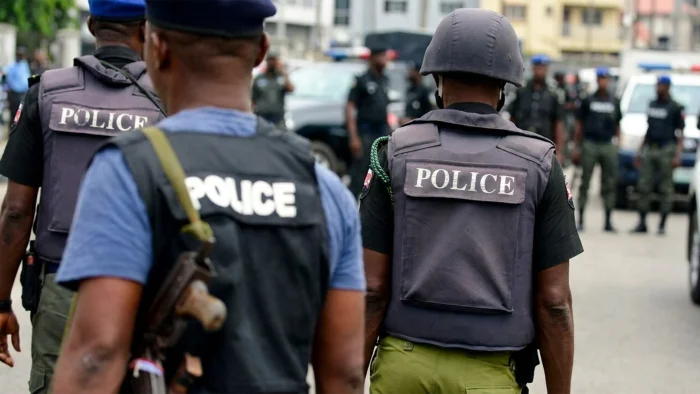
That disagreement matters because the police response itself has evolved. The Lagos Command initially stated that no teargas canister was fired and said an image circulating online was AI-generated. A subsequent Nigeria Police Force position defended the use of proportionate force where a gathering becomes riotous or disorderly, creating a public controversy over whether the issue is the existence of a deployment, the circumstances surrounding it, or both.
Why the Demand for Fatai’s Removal Is Escalating
YRC’s demand goes beyond the immediate confrontation. The group wants CP Tijani Fatai and police spokesperson Abimbola Adebisi removed and subjected to disciplinary proceedings, while also demanding an independent investigation capable of determining who authorised or carried out the alleged teargas deployment.
The campaigners have also connected the incident to an alleged broader pattern of confrontations between police and protesters in Lagos, citing an earlier January 28 anti-eviction demonstration in Alausa as another example. Those claims remain allegations by the group and should be tested through credible investigation rather than treated as established findings. The deeper issue is therefore bigger than one canister of teargas.
When a government institution faces citizens demanding benefits they believe they have earned, the state’s handling of the protest becomes part of the legitimacy equation. Pensioners are not merely another protest constituency; they are former public workers whose claims centre on retirement income, making the dispute particularly sensitive in a country where inflation and household costs can sharply erode fixed incomes.
Evidence, Transparency and Public Trust
The conflicting accounts have created the precise environment in which an independent investigation becomes necessary. Global Rights and other civil society organisations have condemned the reported use of teargas against the pensioners and argued that peaceful assembly remains an important channel through which citizens can demand government accountability. Another rights group, RULAAC, has specifically pointed to the conflicting accounts as a reason for an immediate and transparent investigation.
The police, for their part, have maintained that citizens must not turn demonstrations into disorderly gatherings and that officers can use proportionate force when public order breaks down. That position does not by itself settle what occurred in Alausa; the central question remains whether force was actually used, who authorised it, what circumstances preceded it and whether the response was proportionate.
A credible investigation would need to examine available video recordings, photographs, eyewitness accounts, hospital or medical evidence where available, police operational records and the orders given to officers deployed at the protest. That is how the dispute moves from competing narratives to verifiable facts.
The Political Cost of a Police Denial
For Lagos, the stakes extend beyond the pensioners. The state has repeatedly positioned itself as a major economic and administrative centre, but investor confidence and public legitimacy depend not only on infrastructure and commercial activity. They also depend on whether citizens believe security institutions can manage dissent without excessive force and whether complaints against those institutions receive credible scrutiny.
YRC has placed Governor Babajide Sanwo-Olu’s administration inside that debate by arguing that the government bears responsibility for the conditions that pushed pensioners onto the streets. The campaigners also claim that a governor’s aide apologised to the pensioners after the incident, although that claim should likewise be independently verified before being treated as an official admission of police responsibility. The cleanest path forward is therefore neither political condemnation nor institutional denial. It is evidence.
Bold Lite Strategic Outlook
The Lagos pensioners’ confrontation could become a significant test of how the state manages peaceful dissent as economic pressure continues to push more citizens toward public protest. An independent fact-finding process would give the police an opportunity to establish whether officers acted within operational rules while giving affected pensioners a credible avenue for redress if misconduct occurred. If the controversy remains trapped between denial and accusation, however, the greater casualty could be public trust in Lagos’ security institutions and the government’s ability to manage future protests peacefully. The immediate pension dispute also exposes a wider governance question: retirement benefits cannot remain unresolved without eventually turning social welfare grievances into political and security challenges.