


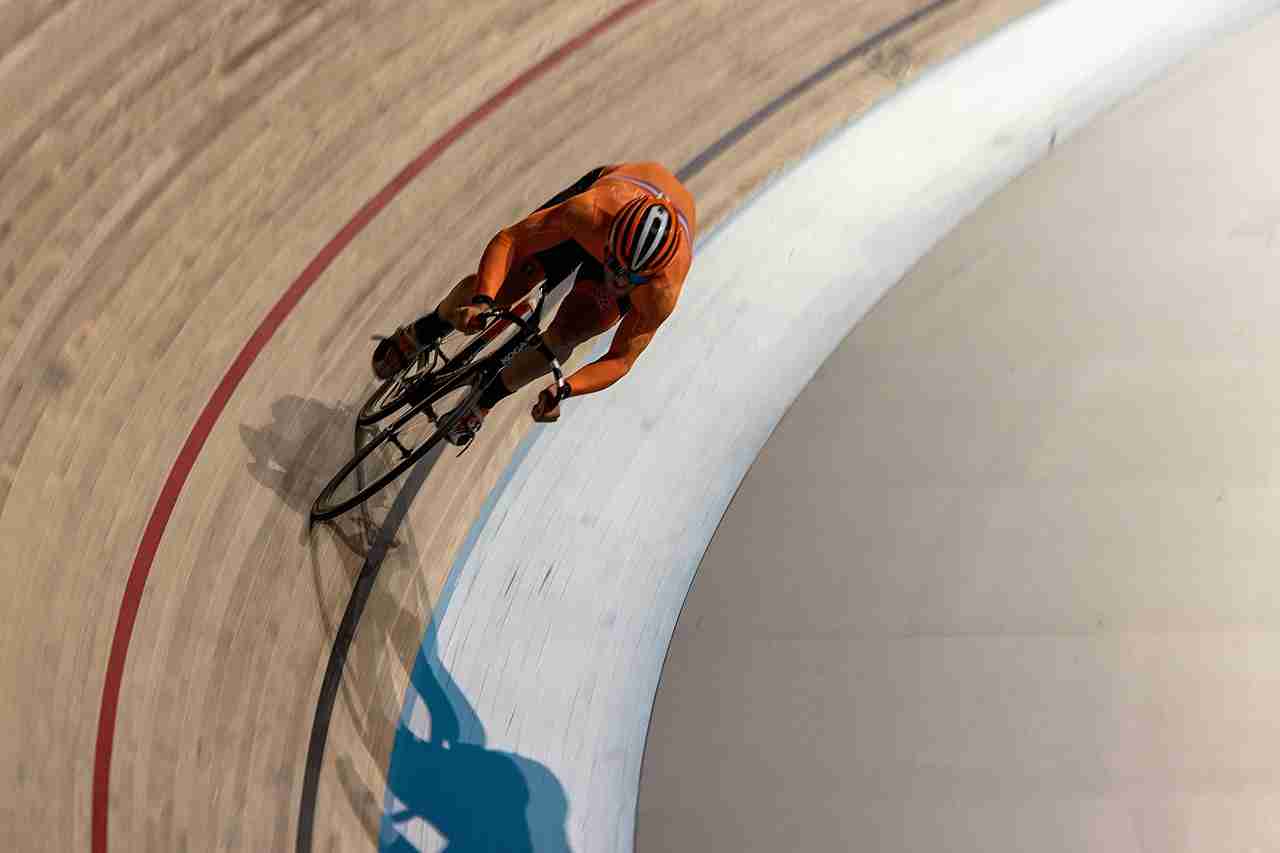

Nigeria’s track-cycling opportunity is not built around a newly constructed ₦180 billion velodrome. It centres on an existing federal sports asset: the velodrome at the Moshood Abiola National Stadium in Abuja, which hosted the 2026 Confederation of African Cycling (CAC) Para-Track and Track African Championships. The event provided evidence of Nigeria’s capacity to host continental cycling competitions. It also brought attention to the wider requirements for developing the sport, including facility management, international technical compliance, athlete preparation and access to high-performance equipment. The investment question is whether Nigeria can turn an existing specialist facility into a consistently accessible and financially accountable sporting asset. The National Sports Commission’s October announcement of a proposed sports infrastructure development bond, targeting more than ₦1 trillion in initial capital-market mobilization, creates a wider financing context. It does not establish a dedicated allocation to the Abuja velodrome. The commercial opportunity should therefore be assessed through the facility’s condition, utilization, operating costs, event income and development impact—not through an unsupported construction valuation.
Abuja’s Velodrome: The Existing Asset
The Moshood Abiola National Stadium velodrome is an established public sports facility. It hosted the 2026 CAC Para-Track Championships from May 9 to 11 and the Track African Championships from May 13 to 17. The UCI’s official competition record confirms Abuja as the host city and the May 13–17 dates for the continental track championship. The event attracted cyclists from across the continent. A report published during the competition stated that more than 100 cyclists from eight countries were participating. The same report said Nigeria had won 16 medals after two days of competition, comprising nine gold, five silver and two bronze. That was a contemporaneous competition update, not a verified final medal tally.
The championship nevertheless demonstrated that Abuja can host a recognized continental cycling event. It also provided a platform for Nigerian athletes to compete against international opposition and gain experience in a specialist discipline. The next test is continuity. A venue’s value cannot be measured only by the competitions it hosts. Its sporting contribution also depends on how often athletes can train there, whether the facility remains available to the national federation and how effectively its equipment and infrastructure are maintained. A 2024 report quoting Nigerian cyclist Ese Ukpeseraye raised concerns about the availability of the velodrome for training when other events were scheduled. That account is not evidence of the facility’s present operating condition, but it illustrates why access arrangements and scheduling should form part of any current facility assessment. The Abuja velodrome should be evaluated as an existing public asset with potential for better utilization. A new-build investment narrative is neither necessary nor supported by the evidence.
Public Sports Investment: What the Figures Actually Cover
The Federal Government’s wider stadium rehabilitation programme provides a relevant infrastructure-financing context, but its figures must not be confused with the value of the velodrome. In January 2026, reporting on the National Sports Commission’s budget indicated that approximately ₦24.642 billion was provided for the upgrade of the Moshood Abiola National Stadium within the Commission’s 2026 appropriation. The stadium was opened in 2003 and had undergone earlier renovation work between 2020 and 2022. The reported allocation relates to the stadium upgrade; it is not a confirmed expenditure figure for the velodrome alone. In May 2026, the Federal Government announced a broader programme of sports infrastructure rehabilitation. The announced work included the stadium pitch, athletics track, lighting, dressing rooms, media facilities, VIP seating, corporate suites and other infrastructure. These approvals indicate a wider effort to restore national sports facilities, but they do not independently confirm that every component has been completed or that the velodrome has received a separate upgrade allocation.
Editorial Observations — “A successful championship establishes sporting capability. A sustainable sports economy requires the facility to remain accessible, operational and financially accountable after the medals have been awarded.”
A further financing development came on October 15. National Sports Commission Chairman Shehu Dikko disclosed plans for a sports infrastructure development bond, with an initial capital-market mobilisation target exceeding ₦1 trillion. The Commission said the initiative had received presidential approval and was intended to support sports infrastructure, rehabilitation and private-sector participation. The distinction between approval, mobilisation and deployment is essential. A proposed bond is not the same as a completed issuance. A capital-market target is not money already raised, and a national infrastructure programme is not evidence of a specific project allocation.
For the Abuja velodrome, the available public information does not establish a dedicated ₦180 billion investment, a private-sector financing syndicate or a new construction programme. Any future investment claim should identify the project sponsor, funding structure, approved scope, procurement records and implementation timetable.
UCI Homologation: The Technical Standard
The Union Cycliste Internationale (UCI) uses Category A and Category B classifications for velodrome homologation. The expression “Category 1”, used in the original draft, does not reflect the current terminology in the UCI’s published classification documents. Category A is reserved for indoor velodromes with a 250-metre track that can host major UCI competitions and meet the applicable specific requirements. Category B covers velodromes of different types and sizes that satisfy the minimum UCI requirements and may host UCI competitions. A 250-metre track alone does not establish Category A status. The UCI’s 2026 regulations specify technical requirements that include track dimensions, bend radii and width. For a 250-metre track, the prescribed bend-radius range is 19–25 metres, while the width requirement is 7–8 metres.
The homologation process also requires a formal application and technical file. The national federation must be informed and involved. A specialist carries out the prescribed measurements under the direction of a UCI delegate, and a group of riders must test the track during the inspection. A detailed inspection report is then prepared. These requirements make homologation a technical and administrative process, not a label that can be inferred from the venue’s appearance or its ability to host a continental championship.
No current homologation certificate or official UCI record establishing the Abuja facility’s category has been identified in the material reviewed for this report. Its present classification should therefore be confirmed directly with the Cycling Federation of Nigeria and the UCI before any claim is made about Category A status or an upgrade programme. For policymakers, the commercial relevance is straightforward. A facility that meets the requirements for higher-level international competitions may be better positioned to attract events, but the return depends on the cost of compliance, the competition calendar, operating capacity and actual demand.
Equipment, Technical Support and Athlete Development
Track cycling relies on specialist equipment, including track bicycles, aerodynamic components, protective gear, timing systems and performance-monitoring tools. These requirements can make participation expensive, particularly when athletes and development programmes have limited access to suitable equipment. Imported high-performance equipment may expose teams to foreign-exchange movements, shipping costs, duties, replacement delays and limited local technical support. However, the scale of Nigeria’s dependence on imported cycling equipment has not been established by a verified trade-data assessment. The report should not claim that domestic carbon-fibre engineering capacity is absent without evidence from manufacturers, trade records or industry research.
The more immediate issue is whether athletes can access appropriate equipment and maintain it consistently. A national development programme requires more than occasional access to elite bicycles. It needs structured coaching, reliable training schedules, qualified mechanics, performance assessment and regular competitions.
The Abuja championships offer a platform on which to build that system. The Cycling Federation of Nigeria and sports authorities could use the event experience to strengthen junior development, women’s participation and para-cycling, while improving the availability of equipment and technical support. The priority should be to develop a dependable pathway from grassroots participation to national and international competition. Expensive equipment purchases without coaching, maintenance and regular training would produce limited long-term value.
The Commercial Case for a Public Velodrome
The commercial potential of the Abuja facility should be assessed through its ability to generate sustained activity without undermining its sporting purpose. Potential revenue sources include competition hosting, venue hire, sponsorship, advertising, broadcast arrangements and compatible events. These are possible commercial channels, not verified current revenue streams. No audited operating accounts, sponsorship contracts, annual utilization figures or event-income statements have been identified to substantiate the original draft’s claims of a 15.60% streaming sponsorship increase or 22,000 visitors.
A credible commercial assessment would require the facility’s annual operating costs, maintenance obligations, training and competition schedule, event revenue, sponsorship income and the terms under which external promoters can use the venue. The financing structure also matters. Any private-sector partnership should clearly establish who owns the asset, who is responsible for maintenance, how revenue is shared and how the national federation and athletes retain access. Commercial activity should complement the facility’s primary sporting function rather than displace it.
The proposed national sports infrastructure bond could become relevant if the Commission establishes transparent project-selection criteria, financing terms and measurable performance obligations. Until a specific allocation or transaction is documented, however, the bond should be treated as a national financing initiative rather than a velodrome investment commitment.
The Outlook: From Event Hosting to Sustainable Capacity
Nigeria’s 2026 continental cycling championships provide a credible starting point for a wider sports-development strategy. Abuja has demonstrated its ability to host the event, and Nigerian athletes have gained valuable exposure to continental competition.
The next phase should focus on the practical conditions that sustain performance: predictable access to the velodrome, a documented facility-condition assessment, confirmation of UCI homologation status, regular competitions, improved equipment support and transparent operating arrangements.
The Federal Government’s wider stadium rehabilitation programme and the National Sports Commission’s proposed infrastructure bond may create opportunities for investment. Their success should be judged by funds actually mobilized, projects delivered, facilities maintained and athletes supported—not by headline targets alone.
Nigeria does not need an unverified ₦180 billion velodrome narrative to establish the economic case for track cycling. It needs to demonstrate that an existing public facility can support regular training, attract credible competitions and operate under a financing model that is transparent and sustainable.
Editorial conclusion: The real opportunity is to turn Abuja’s velodrome from an event venue into a consistently productive sporting asset. That requires a stronger operating system, measurable investment and a development pathway that continues long after the championship medals have been awarded.
References
CAC Track African Championships – Championnats Africains CAC Piste. (n.d.). UCI. https://www.uci.org/competition-details/2026/PIS/77895
Abe, O., & Abe, O. (2026, May 13). Nigeria clinch 16 medals at 2026 African Cycling Champs. Punch Newspapers. https://punchng.com/nigeria-clinch-16-medals-at-2026-african-cycling-champs/
Anyanwu, S., & Anyanwu, S. (2026, May 27). FG approves major sports infrastructure upgrades nationwide, as NSC drives new era of infrastructure development. Federal Ministry of Information and National Orientation. https://fmino.gov.ng/fg-approves-major-sports-infrastructure-upgrades-nationwide-as-nsc-drives-new-era-of-infrastructure-development/
Nigeria – Federations – African Cycling Confederation. (n.d.). Confédération Africaine De Cyclisme. https://cac-4africa.com/en/federations/nigeria