
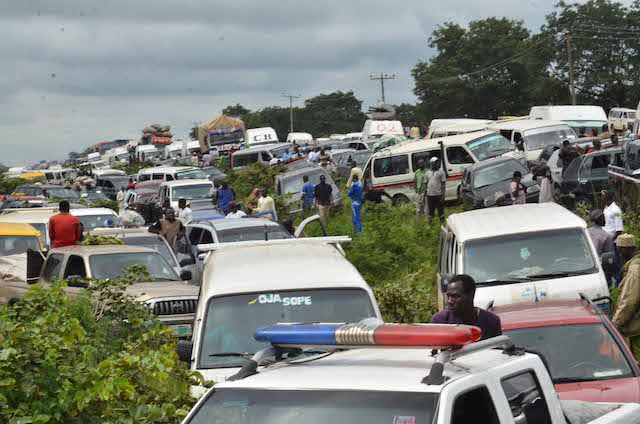
A prolonged traffic gridlock on the Abuja–Kaduna Expressway has left travellers, motorists and truck drivers stranded for days, with some road users reportedly spending as long as three days navigating sections of the strategic highway.
The congestion, which began worsening on Saturday, August 22, 2026, has produced long queues of vehicles, particularly articulated trucks, and severely slowed movement along the corridor connecting the Federal Capital Territory with Kaduna and other parts of northern Nigeria.
The latest disruption has renewed concerns about the condition of the highway and the impact of ongoing construction on one of the country’s busiest transport routes.
Reports indicate that motorists have struggled to move through affected sections, while some travellers have attempted to escape the congestion by diverting through surrounding villages.
Those alternative routes, however, have reportedly created additional difficulties.
According to accounts gathered by SaharaReporters, some armed youths in villages along diversion routes allegedly established roadblocks and demanded payments from travellers before allowing them to pass.
Some of the youths reportedly described the payments as fees for clearing travellers through their communities.
One affected motorist quoted in the report said residents in some villages were demanding a “clearance fee” before allowing vehicles to proceed.
The allegations have added a security dimension to what initially began as a severe traffic problem, particularly because travellers attempting to avoid the main highway have reportedly been exposed to unauthorised checkpoints and demands for money.
The congestion itself has been linked to a combination of heavy vehicular movement, articulated trucks and ongoing construction activities along the Abuja–Kaduna–Kano corridor.
A separate report by Blueprint on August 22 observed significant congestion around the Kateri corridor, with traffic moving slowly in both directions. The report attributed the situation to ongoing construction, heavy traffic and the presence of articulated vehicles.
ALSO READ: New Zealand Moves to Restrict Social Media Access for Children Under 16
The Kateri–Jere–Zuba stretch is particularly significant because it forms part of the first section of the ongoing Abuja–Kaduna–Kano Super Highway project.
The Federal Government has previously stated that substantial progress has been made on the broader project. In August 2026, the government was reported to have said that about 80 per cent of the project’s construction cost had been paid, with completion targeted for November.
The reported payments amount to more than ₦600 billion, against an estimated total construction cost of ₦752 billion, according to the report reviewed by SaharaReporters.
The scale of the reported financial commitment has increased expectations that construction along the corridor should eventually produce more reliable movement for road users.
However, motorists continue to face significant disruption while construction remains underway.
Separate Federal Ministry of Works expenditure records cited in the report also showed ₦313.2 million spent on two interventions relating to the Abuja–Kaduna Road between September 2024 and February 2025.
On September 11, 2024, the ministry reportedly paid ₦180.74 million to Dankudan International Limited for repairs to a bridge at kilometre 68+850 on the Abuja–Kaduna Road in Kaduna State.
Another payment of ₦132.47 million was reportedly made to Yolas Consultants Ltd on February 25, 2025, for an engineering design review of the Abuja–Kaduna Road across the Federal Capital Territory, Kaduna and Kano states.
Together, the two payments amounted to ₦313.2 million, according to the records cited by SaharaReporters.
Despite these interventions and the much larger spending associated with the Abuja–Kaduna–Kano project, the latest traffic crisis demonstrates that construction activity has continued to create serious movement challenges for road users.
The problem is not entirely new.
The Abuja–Kaduna corridor has repeatedly experienced severe congestion, particularly when articulated vehicles break down, obstruct lanes or become involved in accidents.
Earlier incidents have also demonstrated how quickly a blockage can affect thousands of road users because of the highway’s importance as a major connection between Abuja and northern Nigeria.
In May 2026, the Federal Road Safety Corps intervened after a major obstruction at the Azara Bridge, Jere axis, disrupted traffic. The FRSC later announced that normal vehicular movement had been restored following an emergency operation involving security agencies.
Another traffic advisory issued by the FRSC during the Eid-el-Kabir travel period attributed heavy congestion on parts of the corridor to increased traffic, ongoing construction, dangerous overtaking and lane indiscipline.
The latest disruption has nevertheless lasted considerably longer for some travellers.
SaharaReporters reported that some motorists and passengers had remained on the road for up to three days, while long lines of vehicles continued to build up at affected locations.
The prolonged delays have created additional concerns for passengers travelling with food, water and other basic necessities, particularly those unable to predict when traffic will resume normally.
The situation also has implications beyond passenger inconvenience.
The Abuja–Kaduna route carries significant volumes of commercial traffic, including goods and agricultural products moving between Abuja and northern markets.
Extended delays can therefore affect transport schedules, supply chains and the movement of commercial goods.
Truck drivers are particularly vulnerable to prolonged congestion because articulated vehicles occupy considerable road space and can be difficult to manoeuvre through restricted construction zones.
The combination of heavy trucks, construction and attempts by motorists to overtake or divert can further complicate traffic management.
The alleged roadside levies reported along some alternative routes introduce another layer of concern.
ALSO READ: Four Held as Police Intensify Probe Into Zolani Tete Murder
Travellers who leave the main highway to escape the gridlock may expect to find faster routes through surrounding communities. Instead, some reportedly encountered armed youths demanding payment before allowing passage.
The allegations have not been independently established as evidence of an organised network, and the identities or affiliations of the youths involved were not established in the available reports.
However, the reported incidents underline the security risks that can emerge when severe congestion pushes large numbers of motorists into unfamiliar alternative routes.
The situation also places additional pressure on security and traffic-management agencies responsible for maintaining order along the corridor.
The Abuja–Kaduna highway remains one of Nigeria’s most important transport links, connecting the nation’s political capital with Kaduna and providing onward access to several northern states.
Its strategic importance means prolonged disruption affects far more than motorists travelling between the two cities.
For now, road users continue to face delays while construction and traffic-management challenges persist.
The latest crisis has also renewed attention on the need for effective coordination between construction contractors, traffic authorities and security agencies to ensure that work on the highway does not leave travellers exposed to prolonged disruption or security risks.
ALSO READ: NDLEA Seizes ₦4.4bn Cannabis, Arrests 101-Year-Old Woman
The reported demands for “clearance fees” on alternative routes add urgency to that concern, as motorists seeking to avoid traffic should not have to navigate unauthorised roadblocks.
The immediate priority remains restoring free movement along the affected sections and ensuring that travellers can use alternative routes without facing unlawful demands or threats.
The Federal Government’s reported financial commitments to the corridor have raised expectations that the project will eventually deliver a safer and more efficient route.
Until then, the latest gridlock remains a major test of traffic management, construction coordination and road security along the Abuja–Kaduna corridor.