



The national security challenge is increasingly technological as well as territorial. Terrorist organizations and other non-state actors can exploit digital communications, online recruitment, virtual assets and emerging technologies, complicating the work of agencies responsible for intelligence, border security and counter-terrorism. At the same time, the Nigerian Air Force’s latest operational figures and the opening of the Africa International Defence Exhibition (AFRIDEX) 2026 highlight two distinct priorities: sustaining military operations and developing domestic defence-industrial capacity. The strategic question is whether these developments will translate into more effective intelligence-sharing, stronger operational readiness and measurable improvements in Nigeria’s ability to develop and sustain defence capabilities locally. Official announcements establish activity and policy direction; they do not, on their own, establish that a unified national cyber-defence architecture or a self-sufficient defence manufacturing base has been achieved.
“Intelligence has operational value only when reliable information reaches the right decision-maker in time to support lawful and effective action.”
The Asymmetric Threat: Technology Expands the Security Problem
At a high-level African Lessons Learned Forum on Counter-Terrorism Cooperation, Intelligence Sharing and Emerging Technologies in Abuja on October 26, National Security Adviser Nuhu Ribadu stressed the importance of African ownership, indigenous institutions and regional cooperation in confronting terrorism. He also argued that military operations alone cannot permanently eliminate the threat. The concern is not simply that violent groups possess more sophisticated equipment. Digital platforms can expand their reach, online financial channels can complicate investigations, and emerging technologies can create new opportunities for propaganda, recruitment, surveillance and operational coordination. These methods can operate across jurisdictions, while investigations and intelligence exchanges remain subject to different legal powers, technical capabilities and institutional procedures.
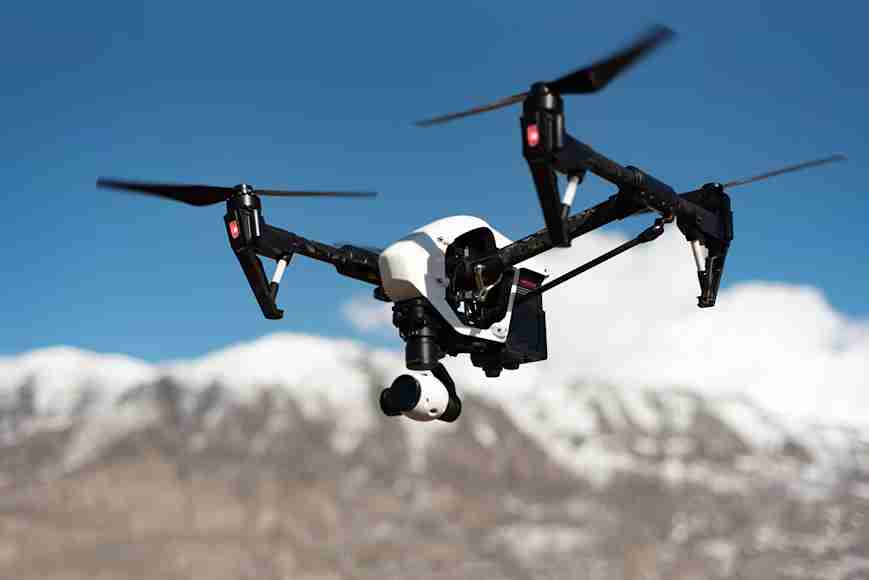
A separate regional training programme reported earlier in October highlighted terrorist exploitation of social media, cryptocurrencies, drones and artificial intelligence. The implications for Nigeria are significant, although the existence of these broader threats should not be confused with proof that every insurgent faction has advanced autonomous or AI-enabled operational capabilities.
Three operational priorities follow:
- Counter-drone readiness: Security agencies need the ability to detect, identify and respond lawfully to hostile unmanned aircraft. Procurement decisions should be based on assessed threats, system interoperability, operator training and lifecycle costs—not equipment acquisition alone.
- Digital investigations: Investigators need the technical skills and lawful access required to trace financial activity, preserve electronic evidence and connect digital intelligence to cases that can withstand judicial scrutiny.
- Regional intelligence exchange: Threat information must move between relevant national and regional agencies quickly enough to support decisions, while protecting sensitive sources and complying with applicable law.
The central issue is not whether technology matters. It is whether institutions can convert technological signals into reliable intelligence and timely operational decisions.
The Defence Operations Ledger: What the Air Force Figures Show
The Nigerian Air Force reported that it recorded more than 2,900 sorties and over 6,100 flying hours between November 2025 and September 2026, consuming nearly 10 million litres of Jet A-1 aviation fuel in support of national security operations. The service said the missions included precision air strikes, armed reconnaissance, surveillance and close air support for ground forces. It attributed mission planning to actionable intelligence, defined objectives and assessments of operational outcomes.
These figures provide a measurable view of operational activity. They also demonstrate the scale of the aviation resources required to sustain military support operations over an extended period.
| Operational indicator | Reported figure | Analytical significance |
| Reporting period | November 2025–September 2026 | Eleven-month operating window |
| Sorties | More than 2,900 | Indicator of mission activity |
| Flying hours | More than 6,100 | Measure of aircraft utilization |
| Jet A-1 consumption | Nearly 10 million litres | Indicator of fuel requirements |
Source: Nigerian Air Force statement reported on October 26, 2026. Figures are official service disclosures, not an independent audit of operational effectiveness.
The figures should not be treated as proof of improved territorial control or a reduction in insurgent activity. That assessment would require additional evidence, including mission outcomes, aircraft availability, maintenance performance, civilian-harm monitoring and independently verifiable security trends. They nevertheless reveal an important resource-management challenge. Aircraft operations require fuel, maintenance, spare parts, trained personnel and dependable supply arrangements. Domestic production and maintenance capabilities could reduce selected external dependencies, but the extent of any savings would need to be demonstrated through procurement costs, delivery performance and lifecycle data.
Editorial assessment: Nigeria’s strategic advantage will not come from acquiring technology alone. It will depend on the institutions, people, industrial systems and financial controls that turn technology into sustainable security capability.
AFRIDEX 2026: Defence Manufacturing Must Move Beyond Exhibition
The Africa International Defence Exhibition opened in Lagos on October 26 and is scheduled to run through October 29. The event is hosted by the Defence Industries Corporation of Nigeria (DICON) in partnership with dmg events, with government support.
AFRIDEX creates a platform for defence manufacturers, military officials, policymakers and prospective buyers to examine equipment, explore partnerships and discuss industrial cooperation. Its programme includes defence technologies across multiple domains, including land, air, maritime and cyber capabilities.
For Nigeria, the larger policy question concerns what follows the exhibition. A demonstration can establish that a system is available to be shown. It does not establish that Nigeria can manufacture it at scale, maintain it independently, source its critical components locally or export it competitively.
A credible industrial assessment should track four outcomes:
- Local production: Which products will actually be manufactured or assembled in Nigeria, and at what production capacity?
- Technology transfer: What technical knowledge, intellectual property rights, training and engineering responsibilities will Nigerian partners receive?
- Lifecycle support: Will local facilities provide maintenance, repairs, spare parts and upgrades throughout the equipment’s service life?
- Commercial delivery: Which announcements progress into funded contracts, commissioned facilities, completed deliveries and measurable production?
These distinctions matter because defence-industrial sovereignty is not synonymous with buying locally or signing a memorandum of understanding. It depends on the ability to sustain equipment, retain technical expertise, manage costs and deliver reliable products over time. DICON’s role gives the exhibition particular relevance to Nigeria’s industrial ambitions. Yet a claim that the country is already approaching defence self-sufficiency would require production, sourcing and sustainment evidence that goes beyond the exhibition itself.
Cybersecurity and Intelligence Integration: The Institutional Test
Nigeria’s technology-related security agenda also depends on coordination among intelligence, military, law-enforcement, financial and border-management institutions. Each agency may hold information relevant to a threat, but the operational value of that information depends on whether it can be lawfully shared, accurately interpreted and delivered to the people responsible for acting on it.
Institutional weaknesses deserve scrutiny.
Fragmented information systems. Different databases and reporting procedures can delay the exchange of information. The existence and scale of any specific interoperability failure, however, must be established through documented assessments rather than assumed. Uneven technical capacity. Agencies require trained personnel and appropriate systems for digital forensics, open-source intelligence, cyber-threat analysis and the preservation of evidence. Technology without skilled operators can produce large volumes of data without improving decision-making. Accountability and legal safeguards. Expanded digital surveillance and information-sharing powers must operate within applicable law. Evidence handling, access controls, oversight and protection of legitimate personal information are essential to the credibility of security operations.
The National Counter Terrorism Centre’s regional role is relevant to this agenda. Nigerian officials have discussed pursuing accreditation for the centre as a regional centre of excellence. That objective should be described as a process in development unless formal accreditation is confirmed. The appropriate performance measures are practical: the speed of verified intelligence exchange, the quality of inter-agency referrals, the time required to process digital evidence, the number of investigations advanced through coordinated work and the demonstrable contribution of intelligence to lawful operational outcomes.
Defence Finance and Domestic Supply Chains
Defence industrialization is also a financial-governance challenge. Local production can create opportunities to reduce selected import dependencies, but domestic manufacture is not automatically cheaper or more reliable. Its value depends on production scale, input costs, technical quality, procurement integrity and the availability of replacement components. Nigeria should therefore evaluate defence-industrial projects against transparent milestones. These should distinguish approved budgets from actual expenditure, signed agreements from funded contracts, and announced capacity from completed production.
The same discipline applies to claims about procurement oversight. Any reported partnership involving professional accounting bodies, audit institutions or financial-intelligence agencies should be supported by a verifiable announcement or official record. Without that evidence, it would be premature to present such an arrangement as an established feature of the national defence procurement system. A credible industrial policy should publish appropriate information on contract delivery, local-content performance, maintenance capacity and the use of public funds, while protecting genuinely sensitive operational details.
Bold Lite Strategic Security Outlook
Nigeria’s national security priorities increasingly span physical territory, digital systems, military operations and industrial capacity. The available evidence points to active counter-terrorism cooperation, sustained air operations and a major new platform for defence-industry engagement. It does not yet establish that Nigeria has completed a transition away from conventional military approaches, built a fully integrated national cyber-intelligence system or achieved defence-industrial self-sufficiency. The next phase should be judged against outcomes rather than declarations: whether intelligence reaches operational units faster, whether air assets remain serviceable, whether domestic manufacturers deliver dependable equipment, and whether defence procurement produces measurable capability at a defensible cost.
“Defence self-reliance should be measured in production delivered, maintenance performed locally and supply chains sustained—not in announcements or memoranda alone.”