


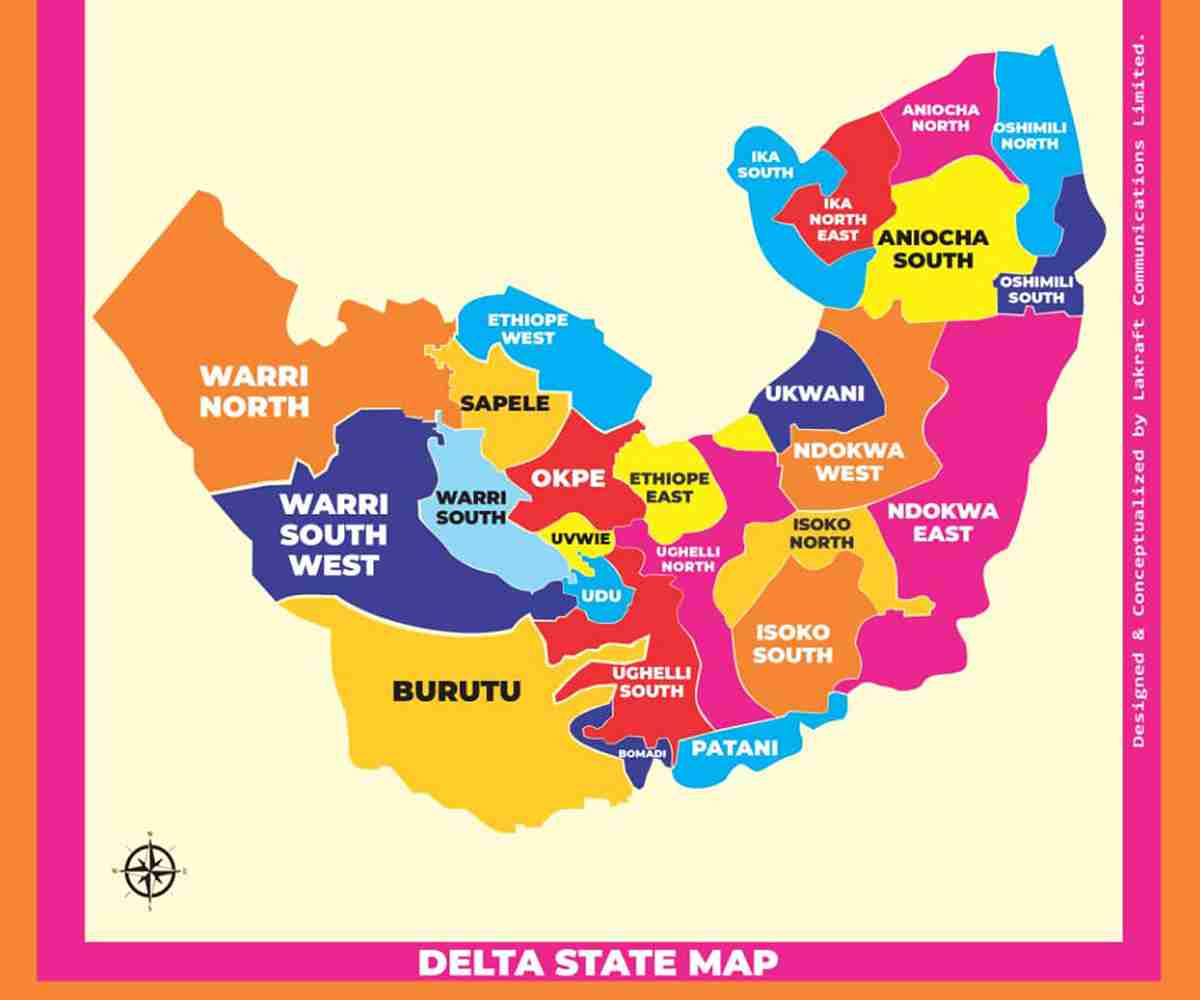

Delta State’s proposed ₦1.237 trillion expenditure framework for 2027 places capital investment at the centre of its fiscal strategy, but the sustainability of the plan will depend on revenue mobilization, the composition of federal transfers and the government’s ability to convert budgetary allocations into completed economic assets. The State Executive Council approved a proposed appropriation of ₦1,236,874,981,081 on November 9, 2026, for transmission to the Delta State House of Assembly. The proposal follows an earlier budget consultation in Asaba, where Commissioner for Economic Planning, Sonny Akporokiamo Ekedayen, outlined the projected expenditure structure and revenue assumptions for the next fiscal year.
The proposed allocation comprises ₦806.87 billion for capital expenditure, representing 65.23 per cent of the total, and ₦430 billion for recurrent expenditure, accounting for 34.77 per cent. The composition indicates a fiscal preference for infrastructure and development spending over routine government expenditure. However, the capital allocation’s economic value will ultimately depend on project selection, procurement discipline, funding availability and implementation capacity.
Capital Allocation and the Economics of Public Investment
The proposed capital expenditure envelope of ₦806.87 billion is the most consequential component of the 2027 plan. Its potential economic transmission extends beyond construction activity to transportation efficiency, market access, agricultural distribution, industrial logistics and the cost of doing business. Road construction and rehabilitation across the state’s three senatorial districts form a significant part of the government’s announced investment programme. Other approved interventions include judicial accommodation, educational facilities, public lighting and community infrastructure.
These projects can support economic activity through employment, demand for construction materials and improved connectivity. Their longer-term contribution, however, depends on whether they remove identifiable constraints on production and commerce. A road connecting agricultural communities to markets, for example, may generate wider economic returns than an isolated project with limited commercial or social connectivity. The distinction between capital appropriation and capital execution is therefore critical. A ₦806.87 billion allocation does not establish that the state will release, spend or convert the entire amount into completed assets within the fiscal year. The relevant performance indicators will include capital releases, procurement timelines, project completion rates and the economic utilization of completed infrastructure.
The recurrent allocation of ₦430 billion also requires scrutiny. Recurrent spending is not inherently unproductive: salaries, healthcare operations, education services, maintenance and public administration sustain the institutions required to make capital assets functional. The fiscal challenge is to control administrative inefficiencies without weakening the operational capacity needed to maintain public infrastructure and deliver essential services.
Revenue Mobilizations Determines the Spending Capacity
Delta’s revenue performance provides a more useful starting point for evaluating the proposed budget than the expenditure headline alone. At the October 30, 2026, budget stakeholders’ consultation, the Commissioner for Economic Planning reported that the state generated approximately ₦1.02 trillion in total revenue between January and September 2026, equivalent to 79 per cent of its prorated revenue target of ₦1.29 trillion. Internally generated revenue stood at ₦209 billion, exceeding the prorated target of ₦187.5 billion, while Value Added Tax receipts reached ₦100.7 billion, compared with a target of ₦90 billion.
The reported figures suggest that IGR collection was performing above its prorated benchmark during the period. The government attributed part of the improvement to digitalization of revenue collection, which it said had increased average monthly IGR from approximately ₦8.5 billion in early 2025 to more than ₦11 billion by the fourth quarter of 2026. These are government-reported performance figures and should be assessed against audited collections and the state’s full-year accounts. For 2027, the government is reported to be targeting IGR of between ₦300 billion and ₦350 billion. Against the proposed ₦1.237 trillion expenditure envelope, this would cover approximately 24.3 to 28.3 per cent of total spending. The remaining ₦887 billion to ₦937 billion would need to be supported by other revenue sources and any financing items recognised in the final fiscal framework.
This makes the composition and reliability of federal transfers particularly important. Statutory Federation Account allocations, derivation revenue and other intergovernmental receipts can provide substantial fiscal capacity, but their naira value is influenced by national revenue performance, oil production, exchange-rate movements and the broader distribution of Federation Account proceeds.
The state’s exposure to these variables means that a credible budget must be built around conservative revenue assumptions and a clear financing schedule. A projected increase in IGR is useful, but it does not by itself establish that the full expenditure programme is financeable. The final estimates should disclose the expected contribution of each major revenue stream, the assumptions behind those projections and the contingency measures available if collections fall below target.
A Smaller Nominal Envelope, but What About Real Spending?
The proposed 2027 budget is lower than the reported ₦1.729 trillion approved appropriation for 2026. On that comparison, the new proposal represents a nominal reduction of approximately 28.5 per cent. That reduction is significant, but it should not automatically be interpreted as improved fiscal discipline or a corresponding reduction in the state’s real economic footprint. The 2026 figure represents an approved budget, not necessarily the amount actually released or spent. A meaningful assessment requires the final 2026 budget performance report, including actual revenue, recurrent expenditure, capital releases and outstanding commitments.
Inflation also complicates the comparison. When the general price level rises, a smaller nominal budget can translate into a substantially lower volume of goods, services and infrastructure that government can purchase. The real value of the proposed capital allocation will depend on construction costs, imported equipment prices, labour costs and the prices of other project inputs during 2027. The government therefore needs to demonstrate that the smaller expenditure envelope reflects a more realistic alignment between revenue and spending, rather than a reduction in the purchasing power of planned public investment. Without a consistent comparison of budget execution and price-adjusted expenditure, the nominal reduction alone cannot establish whether the state’s fiscal position has strengthened.
Debt Reduction and the Quality of Fiscal Adjustment
The government’s reported debt-reduction programme is another relevant part of the fiscal picture. At the 2026 budget stakeholders’ engagement, the Commissioner for Economic Planning said Delta’s legacy debt had fallen from ₦463 billion to ₦63 billion, with the outstanding balance targeted for clearance by the first quarter of 2027. If independently reconciled, that reduction would represent a substantial improvement in the state’s legacy-liability position and could create additional room for future capital spending by reducing debt-service and settlement pressures. However, the reported legacy-debt balance should not be confused with the state’s complete public debt stock. It requires reconciliation with the Debt Management Office’s domestic and external debt records, as well as the state’s audited financial statements and outstanding contractor obligations.
Debt sustainability is not determined solely by the amount outstanding. The maturity profile, interest costs, arrears, contingent liabilities and the relationship between debt service and dependable revenue are equally important. A government can reduce one category of legacy obligations while retaining other liabilities that continue to constrain its fiscal flexibility. The proposed 2027 framework will therefore need to demonstrate how debt repayment, capital expenditure and recurrent commitments are being balanced without creating new arrears or relying on optimistic revenue projections.
Bold Lite Outlook:
Legislative Scrutiny and the Execution Imperative
The Delta State House of Assembly’s adoption of recommendations on the 2027–2029 Medium-Term Expenditure Framework and Fiscal Strategy Paper on November 5 established an important stage in the state’s medium-term fiscal planning. The reported recommendations emphasized revenue diversification, non-oil revenue mobilization, expenditure management, capital investment and stronger attention to flood and erosion control. The Executive Council’s subsequent approval of the 2027 budget proposal on November 9 moves the annual spending plan towards legislative consideration. The two developments should be distinguished: adoption of the medium-term fiscal recommendations does not constitute passage of the annual appropriation bill.
Lawmakers will need to examine the revenue assumptions, the allocation between capital and recurrent spending, the cost and implementation schedule of major projects, and the consistency of the annual estimates with the approved medium-term framework. Public scrutiny should also extend to the geographical distribution of capital expenditure and the maintenance costs associated with new infrastructure.
For Delta’s economy, the central issue is not the size of the proposed appropriation in isolation. It is whether the state can sustain its revenue base, protect productive investment from funding interruptions and ensure that public expenditure generates durable economic returns. The proposed ₦1.237 trillion framework sets out the intended scale of government activity in 2027; its macroeconomic significance will be determined by the quality of its financing and the discipline of its execution.